How to Choose a Fitness Academy in Nepal — What to Look For Before You Enroll
How to Choose a Fitness Academy in Nepal — What to Look For Before You Enroll
The fitness industry in Nepal is growing fast. More gyms are opening across Kathmandu, more Nepalis are pursuing personal trainer careers abroad, and demand for qualified fitness professionals has never been higher. But with more options appearing — fitness academies, online courses, weekend workshops — choosing the right institution has become genuinely confusing.
This guide breaks down exactly what to look for before enrolling in a fitness academy in Nepal, so you can make a decision based on facts rather than marketing. If you want to see what a verified, internationally recognized fitness academy looks like in practice, visit NAES — Nepal's leading fitness academy in Kathmandu and the only official NASM International Education Partner in the country.
1. Is the Curriculum Aligned with International Standards?
The first question to ask any fitness academy in Nepal is: what standard does your curriculum follow?
The most respected fitness education frameworks globally are developed by bodies like NASM (National Academy of Sports Medicine), ACE (American Council on Exercise), ISSA, and NSCA. These organizations have spent decades building evidence-based systems for exercise science, client assessment, and program design.
A local fitness academy that builds its curriculum around these standards gives you knowledge that translates internationally — not just a certificate that works within Nepal.
If a fitness academy cannot tell you which international standard their curriculum is based on, that is worth noting.
2. Does the Academy Have Official Affiliation or Partnership Status?
There is a difference between an academy that says it is "NASM-aligned" and one that is an official NASM International Education Partner. The latter has been vetted, approved, and listed publicly on NASM's partner directory — a process that involves curriculum review, faculty assessment, and ongoing compliance.
This distinction matters for students because official partnership status means the education you receive meets the same quality benchmark as NASM-delivered training anywhere in the world. It is not a marketing claim — it is publicly verifiable.
In Nepal, only one institution holds official NASM partner status — NAES Academy (Nepal Academy of Exercise Science) in Kathmandu. This means NAES is the only fitness academy in the country authorized to deliver and issue NASM certifications directly.
When evaluating a fitness academy, ask: can you show me your official affiliation? Is it publicly verifiable on the certifying body's website?
How to verify: Visit nasm.org/resources/international-partners, select Asia-Pacific, then Nepal. The directory lists every officially approved partner globally — if an academy is not listed there, they are not an official NASM partner, regardless of what their marketing says.
3. Will the Certification Be Recognized Internationally?
This matters enormously for Nepali fitness professionals, many of whom go on to work in the UAE (Dubai, Abu Dhabi), UK, Australia, Qatar, Bahrain, and Singapore. The Gulf region in particular is a major destination for Nepali trainers — and premium gym chains there like Fitness First, Gold's Gym, and Anytime Fitness specifically look for internationally recognized certifications when hiring.
A certification from a local fitness academy with no international recognition will not get you hired at these facilities. Globally recognized certifications — particularly NASM-CPT — are accepted in 100+ countries and carry weight with employers worldwide.
Before enrolling, ask the academy directly: where have your graduates gone to work? Which countries and which gyms have accepted your certification? A credible fitness academy should be able to give you specific answers.
4. Red Flags — How Fitness Academies in Nepal Mislead Students
Nepal's fitness education market has a real problem: many academies display NASM, ACE, or ISSA logos in their marketing without holding any official partnership with those organizations.
Here is the gap between what some academies claim and what they actually deliver:
| What the Academy Claims | What It May Actually Mean |
|---|---|
| "NASM Partner Academy" | They use NASM materials but are not on NASM's official partner list |
| "International Certification" | You receive the academy's own certificate, not an actual NASM/ACE credential |
| "NASM-Certified Instructors" | Instructors individually hold NASM-CPT, but the academy itself is not an official partner |
| "World-Class Curriculum" | Curriculum is modeled on NASM/ACE content but not officially aligned or verified |
| "Job Placement Guaranteed" | They may recommend gyms; actual employment is not guaranteed by anyone |
Warning signs to watch for before enrolling:
- Academy cannot show proof of official partnership (letter from NASM/ACE or a link to their listing on an official directory)
- Instructors cannot show their own verifiable CPT credentials
- No written contract or refund policy before payment
- They rush you toward enrollment without answering questions fully
- Certificate has no expiration date — real international certifications require renewal every 2 years
- No practical client training component — theory only, no supervised coaching sessions
- Cannot tell you which exam body creates and administers your final assessment
5. How to Verify an Academy's Claims — Step by Step
Do not rely on verbal assurances. Here is how to verify a fitness academy's claims before committing:
Step 1 — Check the official partner directory
For NASM: Visit nasm.org/resources/international-partners, select Asia-Pacific, then Nepal. If the academy is not listed, they are not an official NASM provider. You can also view NAES's official NASM partnership document directly on our website.
Step 2 — Ask for written proof of partnership
Request the official partnership letter or documentation from NASM, ACE, or whichever body the academy claims affiliation with. A legitimate academy will have this readily available. If they cannot produce it, that tells you everything you need to know.
Step 3 — Verify instructor credentials
Ask each instructor for their credential number (e.g. NASM-1234567). You can verify any NASM credential in seconds using NASM's online credential verification tool. If an instructor refuses to share their credential number or cannot produce it, do not enroll.
Step 4 — Confirm what credential you will actually receive
Ask directly: "Will I receive a credential issued by NASM/ACE, or will I receive an academy certificate?" These are not the same thing. Get the answer in writing.
Step 5 — Talk to past graduates
Ask the academy for contact details of students who graduated 1–2 years ago. Ask those graduates whether their certification was what the academy promised, and whether it helped them get jobs. Recent graduates are still enrolled in the excitement of finishing; graduates from a year or two back will give you a more grounded picture.
6. Questions to Ask Before Enrolling
Go to any fitness academy in Nepal with these questions ready. A legitimate academy will welcome them. An academy that discourages your questions or cannot answer them clearly is a red flag in itself.
- What exactly will I receive as my credential? (Get the issuing body's name in writing, not just "internationally recognized certificate")
- Are you an official NASM/ACE/ISSA partner? (If yes, show me your listing on their official website)
- Who creates and administers the final exam? (Should be the international certification body, not the academy)
- What is the full cost, including exam fees and renewal? (Hidden costs are common)
- What is your refund policy if I am unsatisfied? (No refund policy is a red flag)
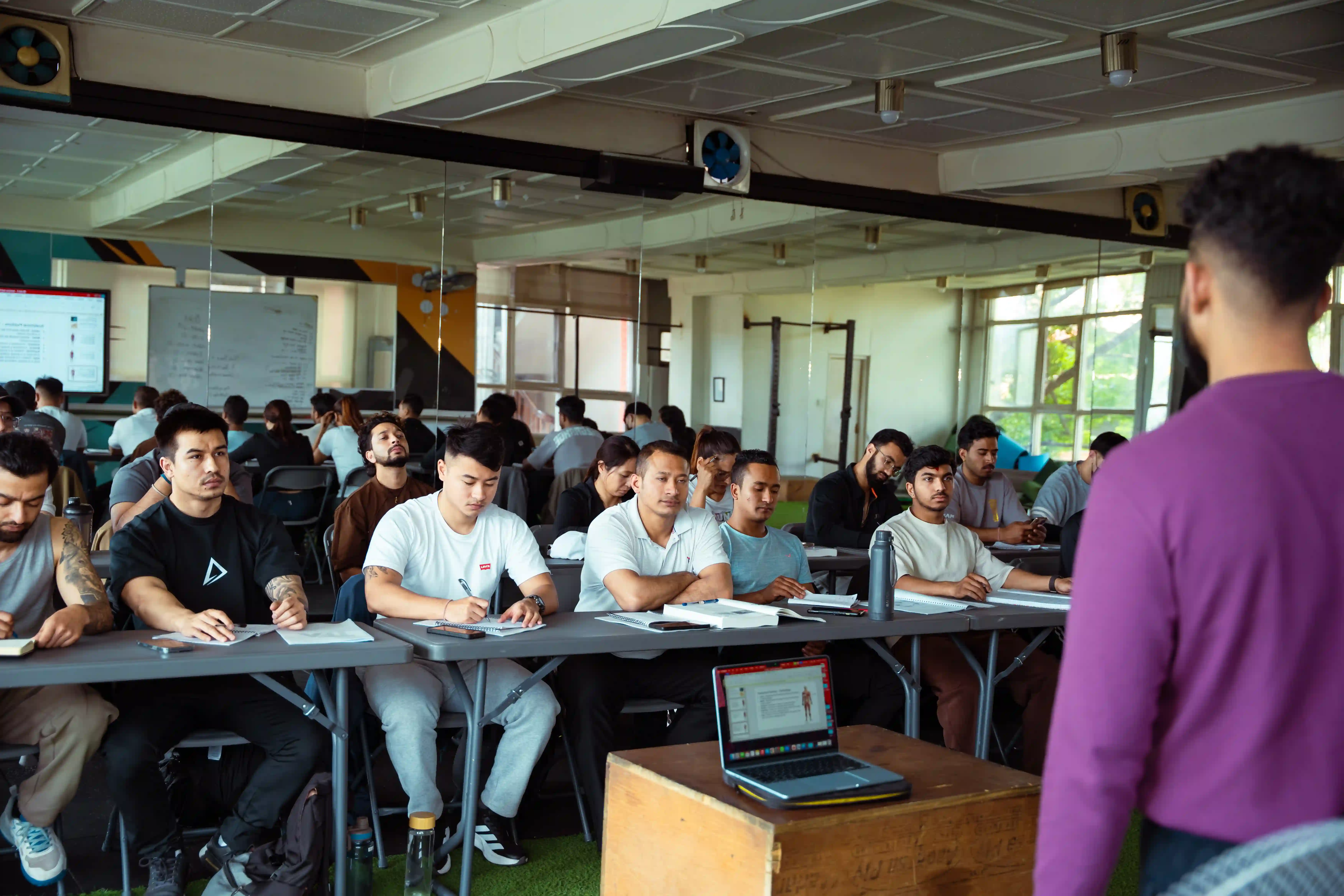
- How many students are in each batch? (Small classes mean more instructor attention)
- Will I train on real clients under supervision? (Theory-only programs produce underqualified graduates)
- Can I contact graduates from one or two years ago?
7. What Does the Practical Training Look Like?
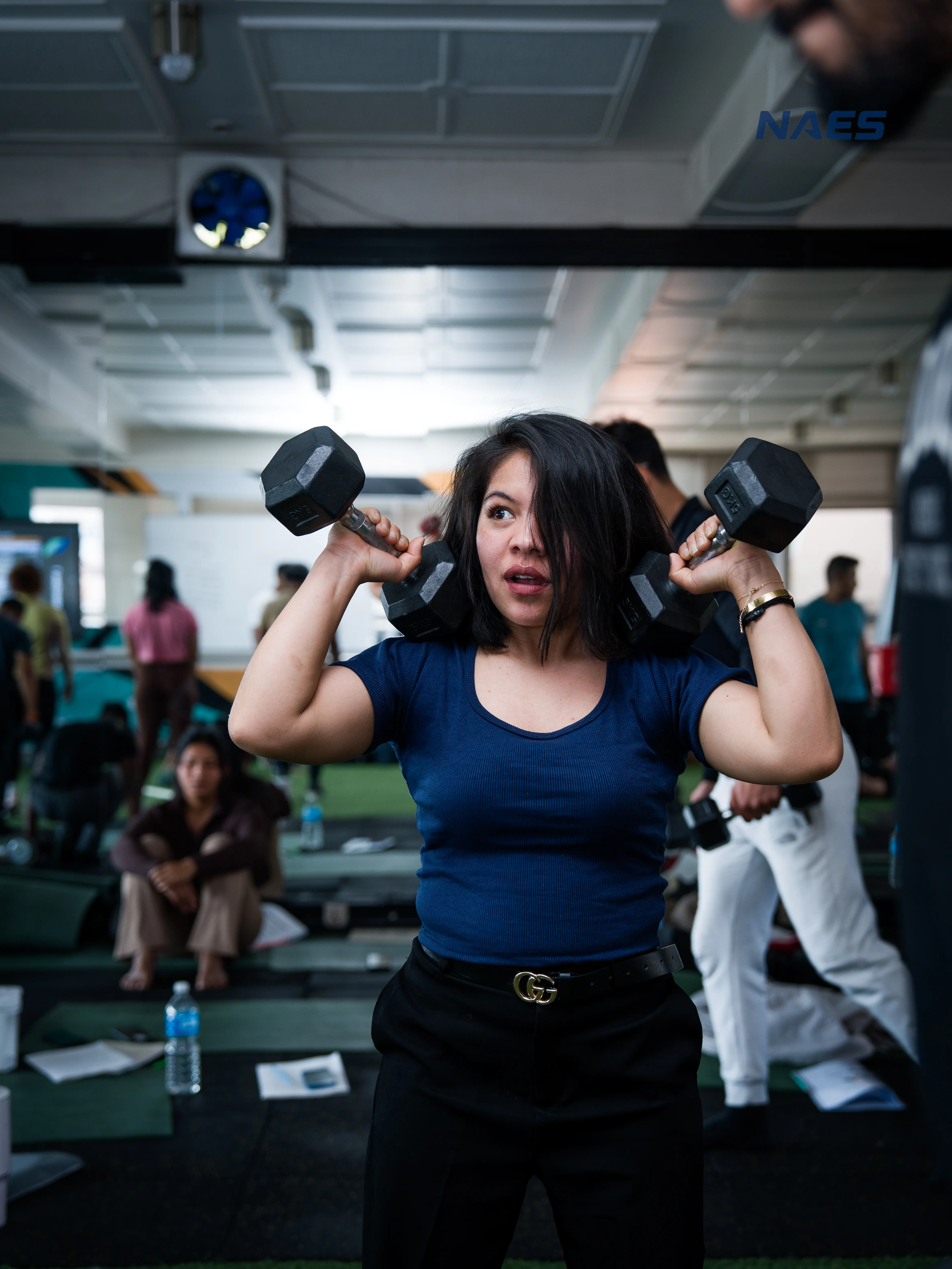
Exercise science is not purely academic. A good fitness academy in Nepal should offer structured practical training — real client coaching sessions, movement assessments, supervised programming — not just classroom lectures and a multiple-choice exam at the end.
Look for academies that offer:
- Supervised hands-on sessions with real clients
- Practical assessment components alongside written exams
- Hybrid formats that combine structured self-study with in-person practical training
Theory without practice produces trainers who know what to say but not what to do. The best fitness education combines both.
8. Check Instructor Qualifications — Not Just the Academy's Name
The quality of your education depends directly on who is teaching you. An academy's brand name or marketing budget says nothing about instructor competence.
A qualified fitness instructor should hold:
- An internationally recognized CPT credential (NASM-CPT, ACE-CPT, or ISSA-CPT) — verifiable online
- At least 2–3 years of real coaching experience training actual clients
- Continuing education credits or specialist certifications beyond the entry-level CPT
- The ability to explain exercise science in depth — biomechanics, physiology, assessment methodology
Ask instructors directly: how many years have you been coaching clients? Can you show me your credential? If an instructor cannot explain basic exercise science concepts in detail, or refuses to show their certification, that is a serious concern.
9. What Happens After You Certify?
The best fitness academies do not disappear after you pass your exam. Career support matters — especially if you are planning to work internationally.
Things to look for:
- Placement assistance and job referrals
- Reference letters for international applications
- An alumni network of working professionals
- Guidance on which advanced certifications to pursue next
If you are planning to work internationally, read our guide on personal trainer salary in Nepal to understand how certification level directly affects earning potential.
10. What Courses Should a Fitness Academy in Nepal Offer?
A credible fitness academy should offer a progression pathway — not just a single entry-level course. Look for:
- A foundational personal trainer certification (NAES CPT or NASM-CPT)
- Specialist courses in areas like functional training, nutrition coaching, or women's health
- Advanced internationally recognized certifications for career growth
At NAES Academy, the full range includes the Certified Personal Trainer Course, Functional Training & Strength Coach Certification, Women's Health & Fitness Certification, and NASM specialist certifications — NASM-CPT, NASM-CES, NASM-CSNC, and NASM-PBC.
11. Location and Batch Availability
Practical training requires physical attendance for in-person components. A fitness academy in Kathmandu that runs monthly batches gives you flexibility. Ask about:
- Batch start dates and frequency
- Whether hybrid or fully online options are available (important for students outside Kathmandu)
- Class size — smaller cohorts generally mean more attention from faculty
Contact NAES to ask about upcoming batch dates and available formats.
Pre-Enrollment Checklist
Before paying any fees, confirm every item on this list:
| Requirement | Verified? |
|---|---|
| Academy is listed on NASM/ACE official partner directory | ☐ |
| Academy can produce official partnership documentation | ☐ |
| You will receive a credential issued by NASM/ACE — not an academy-only certificate | ☐ |
| Each instructor can show a verifiable international CPT credential | ☐ |
| Instructors have at least 2–3 years of real client coaching experience | ☐ |
| Written contract provided before payment with clear terms | ☐ |
| Full cost disclosed upfront (no hidden exam or renewal fees) | ☐ |
| Refund/cancellation policy clearly stated | ☐ |
| Program includes practical client training, not only theory | ☐ |
| You can speak with graduates from 1–2 years ago | ☐ |
| Academy has legal business registration | ☐ |
| All claims match what you find on official certification body websites | ☐ |
If you cannot confirm all of the above, keep asking questions or look elsewhere. A legitimate academy will welcome every one of these checks — because a legitimate academy has nothing to hide.
Summary
Choosing a fitness academy in Nepal comes down to four things: internationally aligned curriculum, verifiable affiliation, recognized certification, and structured practical training. A weekend workshop or a course with no international standard behind it may give you a certificate — but it will not open doors in Kathmandu's premium gyms or abroad.
Use the red flags and verification steps in this guide before you commit your time and money. Ask questions. Check official directories. Verify instructor credentials. Talk to past graduates.
If you are serious about a professional fitness career, start with an institution that can back up its claims publicly. In Nepal, NAES Academy is the only fitness academy with verified NASM International Education Partner status — and the only place in the country where you can earn a direct NASM certification.
Browse all available fitness certification programs in Nepal or read our guide on the best personal trainer certification in Nepal to compare your options. If you want a complete step-by-step entry guide, read: How to Become a Personal Trainer in Nepal — Complete Guide 2026.
Ready to turn this knowledge into a career?